
3 CEUs
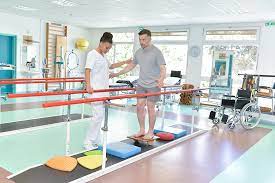
Pusher syndrome is characterised by the patient pushing towards the hemiparetic side with the contralateral side, in a sitting position, standing and during movement, surpassing the gravitational mean line, which produces inappropriate adjustment and postural control.
The purpose of this online course was to determine the effectiveness of physiotherapy treatment in post-stroke pusher syndrome and to extract guidelines for its correct identification and interdisciplinary approach.
load more

3 CEUs
Endometriosis is an often painful female reproductive disorder that is on the rise in Western countries. It is estimated to affect between seven and 10 percent of all women in the general population.
So what has that to do with you as a physiotherapist? Well, did you know that a number of primary musculoskeletal impairments can manifest as pelvic pain?
It is therefore important to be aware of the common signs and symptoms of endometriosis presents, especially those which mask as musculoskeletal.
load more

3 CEUs
The etiology of musculoskeletal pain, in particular back pain, is often evaluated from an anatomical and biomechanical standpoint and the influence of external forces (i.e., loading) acting on the spine. What is often missing is the evaluation of internal forces induced by the patient's own musculature.
The stabilizing function of muscles plays a critical and decisive postural role, which in turn is dependent on the quality of central nervous system (CNS) control.
The approach of Kolar to dynamic neuromuscular stabilization (DNS) is a new and unique approach explaining the importance of the neurophysiological principles of the movement system.
The DNS encompasses principles of developmental kinesiology during the first year of the life; these principles define ideal posture, breathing stereotypes, and functional joint centration from a neurodevelopmental paradigm.
DNS presents a critical set of functional tests to analyze the quality of functional stability of the spinal and joint stabilizers and to assist in finding the key link of dysfunction. The treatment approach is based on the ontogenetic global postural-locomotor patterns.
The primary goal of treatment is to optimize distribution of internal forces of the muscles acting on each segment of the spine and/or any other joint.
In the DNS treatment concept, patient education and participation are imperative to reinforce ideal coordination among all stabilizing muscles.
load more
3 CEUs
Pain is multidimensional and influenced by a number of factors besides tissue damage. This section overlaps with the Key Messages and starts to give the reader more information about potential contributors to pain. You can also view it a little like a myth debunker. We have information on posture, strength, movement habits, sitting, mechanical deformities, depression, fear and exercise. Again, each page can be used as an infographic.
You can print parts of this section or have your patient read the whole thing.
load more

3 CEUs
This 2-part course on paediatric otolaryngology, you will recap basic anatomy of the ear, nose and throat. You will learn about presentations and management of common ENT conditions affecting children, such as acute and chronic otitis media and externa, acute and chronic upper respiratory tract infection, sinusitis and many more; how to complete a thorough assessment and what home care advice to offer.
This course will help you gain clarity and confidence when treating ENT conditions in children.
load more

3 CEUs
-
Rectus femoris
-
Vastus laterali
-
Vastus medialis
-
Vastus intermedius
-
Genu articularis
This online course focuses on Dry Needling therapy and Active Isolated Stretching techniques for the anterior thigh muscles.
Illustration and needling instructions of Dry Needling techniques and AIS for the following anterior thigh muscles are provided:
Their anatomy, function, innervation and contra-indications for Dry Needling are also included.
load more
3 CEUs
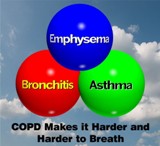
Increasing evidence indicates that chronic obstructive pulmonary disease (COPD) is a complex disease involving more than airflow obstruction.
These courses examine the systemic consequences of airflow obstruction and the serious potential side effects of conventional drug treatment including potentially aggravating a range of comorbid diseases.
The courses also discuss the pros and cons of other therapies.
load more

3 Ethics CEUs
Ethics relates to far more than a simple understanding of that which is legally permissible in society. A nuanced understanding of ethical issues adds depth and meaning to what it takes to live as a mature human in an increasingly complex world. As healthcare practitioners we owe it to ourselves and our patients to act ethically and responsibly so as to benefit all those who seek our help.
This course provides the perfect introduction to the ethical challenges we face in our practices.
load more

3 CEUs
Purpose: Neuromuscular electrical stimulation (NMES) training is known to induce improvement in force production capacities and fibre-type transition. The aim of this study was to determine whether NMES training also leads to changes in the mechanical properties of the human triceps surae (TS) muscle.
Methods: Fifteen young male subjects performed a training protocol (4 weeks, 18 sessions, 4-5 sessions per week) based on a high-frequency isometric NMES programme of TS muscle. Quick-release test was used to evaluate Musculo-Tendinous (MT) stiffness index (SIMT) as the slope of the linear MT stiffness torque relationships under submaximal contraction.
Sinusoidal perturbations allowed the assessment of musculo-articular stiffness index (SIMA) as well as the calculation of the maximal angular velocity maximal shortening/angular velocity (for in vivo muscle) of TS muscle using an adaptation of Hill's equation.
Results: After NMES training, Maximal Voluntary Contraction under isometric conditions and maximal shortening/angular velocity (for in vivo muscle) increased significantly by 17.5 and 20.6 %, respectively, while SIMT and SIMA decreased significantly (-12.7 and -9.3 %, respectively).
Conclusions: These changes in contractile and elastic properties may lead to functional changes of particular interest in sport-related activities as well as in the elderly.
load more

3 CEUs
The purpose of this online course was to investigate the effectiveness of trunk training on trunk control, sitting and standing balance and mobility.
load more