
3 CEUs
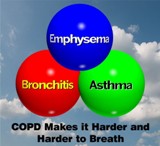
Background and objective: In chronic obstructive pulmonary disease (COPD), accessory respiratory muscles are recruited as a compensatory adaptation to changes in respiratory mechanics. This results in shortening and overactivation of these and other muscles. Manual therapy is increasingly being investigated as a way to alleviate these changes. The aim of this study was to measure the immediate effect on lung function of a soft tissue manual therapy protocol (STMTP) designed to address changes in the accessory respiratory muscles and their associated structures in patients with severe COPD.
Methods: Twelve medically stable patients (n=12) with an existing diagnosis of severe COPD (ten: GOLD Stage III and two: GOLD Stage IV) were included. Residual volume, inspiratory capacity and oxygen saturation (SpO2) were recorded immediately before and after administra?tion of the STMTP.
Results: The mean age of the patients was 62.4 years (range 46?77). Nine were male. Residual volume decreased from 4.5 to 3.9 L (P=0.002), inspiratory capacity increased from 2.0 to 2.1 L (P=0.039) and SpO2 increased from 93% to 96% (P=0.001).
Conclusion: A single application of an STMTP appears to have the potential to produce immediate clinically meaningful improvements in lung function in patients with severe and very severe COPD.
load more
3 CEUs
The first 5 years of life are the most vital when considering the development of a child's nervous system. In part one of this course, you will be provided with all tools necessary to complete a detailed history and examination of your young patients and an explanation of how these assessments relate to development later in life.
In part 3, you will learn about more pathologies such as peripheral nerve injury, Tourette syndrome, neurological infection, the presentation and meaning of abnormal muscle strength reflexes, and how to assess and understand the implications of abnormal head growth. Part 3 also explores in detail cerebral palsy, vertigo, floppy infant syndrome, seizures and brain tumours.
After completing the three-part course, you will have gained significant knowledge to make you more confident when dealing with complicated paediatric cases.
This course is essential for anyone wanting to be an expert in the field of paediatrics.
load more
3 CEUs
We all know that exercise is good for us. There's scientific evidence that shows that people who exercise are generally healthier, fitter, live longer and are less likely to develop a number of disabling medical conditions. As therapists, we often use exercise to reduce patients acute and chronic back, neck, shoulder and knee symptoms.
But what if your patients can't exercise, function or correct their posture effectively because pain inhibits their movement? How often do your patients just want to give up on their rehabilitation because of this? And how frustrating is it for you not to be able to use your skills as a physiotherapist to the fullest extent possible?
This article describes an innovative, practical, quick and easy approach that will give you effective tools to enable your patients to function and/or exercise without pain as well as increase your confidence to utilise exercise as part of patient management.
It's called Exercise and Function without Pain (EFWP) and it's making a huge impact on physical rehabilitation across South Africa.
load more

3 Ethics CEUs
-
confidentiality aspects of disclosure such as injury, use of drugs, alcohol or psychological issues that may impact player's performance;
-
the ethical implications of performance enhancing drugs; and
-
playing or competing with an infectious disease.
How can you, as a health care professional balance the needs of the sports team or organization that is paying your bills, the athlete's (your patient's) desire to perform while in pain and with injury; and the economic consequences of playing/not playing for both the athlete and the team/organization.
This comprehensive course examines some of the difficult legal and ethical issues, the potential consequences surrounding the decisions sports medicine practitioners have to make in this age of professional sport.
load more
3 CEUs
BACKGROUND: A large proportion of individuals with a stroke are unable to return to work, although figures vary greatly. Due to the very high cost of post-stroke care, both tangible and intangible, in the form of long-term social consequences, it seems extremely important to search for factors responsible for the low efficiency of the rehabilitation and recovery process, because this fact has direct influence on future employment.
Such knowledge would enable physiotherapists and occupational therapists to quickly identify those patients who are at risk of rehabilitation breakdown, in order to provide them with special care and include them in intensive therapeutic treatments.
OBJECTIVE: The aim of the study was to assess the efficacy of post-stroke rehabilitation, evaluated within the biopsychosocial aspect.
RESULTS: Statistical analyzes show that patient's age, time since stroke, number of comorbidities, family care capacity, marital status of the patient and also a low level of acceptance of illness, depression symptoms and lack of a sense of self-efficacy were related with low efficacy of post-stroke rehabilitation.
CONCLUSIONS: Comprehensive neurological rehabilitation, taking into account mental challenges and socio-economic circumstances of individuals with a stroke is essential in order to achieve high efficacy of physiotherapy and occupational therapy.
Important external factors may play a pivotal role in returning to work as well and should be taken into account during rehabilitation.
load more

3 CEUs
This section discusses the mechanisms of pain. Without being too technical and whilst not relevant to every patient, it gives good insight into nociception, the processing of nociception and the production of pain. Issues such as the modulation of pain, both habituation (turning down) and sensitization (amplification) are discussed. A basic and brief section for any patient who might want to further details about pain mechanisms is provided.
Each page can be printed separately and used as an infographic.
load more

3 CEUs
Until recently, the hip joint was not thought to be a significant cause of problems in the athletic population. Now, thanks to MRI, and hip arthroscopy we have been able to learn more about some of the common underlying causes of groin pain. These will be covered in part one and two of this course.
Part 3 covers the clinical assessment and treatment of labral tears, ligamentum teres tears, synovitis, chondropathy, surgical management, os acetabulare and lateral hip pain.
This on-line course includes ample photos of exercises for hip rehabilitation.
load more

3 CEUs
-
knowledge of the nutritional requirements of infants and children;
-
best feeding practices for the various age levels in paediatrics; and
-
techniques for collecting and assessing food intake information.
Clinicians have a critical role to play in the field of paediatric nutrition.
This course will provide you with the general principles of nutritional practice and the fundamental strategies used to measure, assess and advise patients accordingly.
On completion of this course, you should be able to provide patients and their families with sound, reliable information that will impact their health in the longer term including:
This course will also familiarise you with the more common disorders of metabolism and nutrition that may be encountered in your practice.
load more

3 CEUs
-
Degenerative Joint Disease;
-
Osteoporosis;
-
Fibromyalgia, Chronic Fatigue and Myofascial Pain Tunnel Syndrome and Carpal Tunnel Syndrome; and
-
more
Prescribe Nutrition Treatment protocols for your musculoskeletal patients presenting with:
load more

3 CEUs
Is it possible to develop trigger points in the pelvic muscles?
Can Dry Needling be utilized for this sensitive and intimate anatomical region?
The mechanism of development of trigger points in the pelvic region will be discussed in this online course. How to apply needling techniques to 13 different pelvic muscles will be illustrated.
load more