

3 CEUs
The increased morbidity and mortality associated with depression is substantial. In this paper, we review evidence suggesting that depression contributes to disease and death through immune dysregulation.
This review focuses on recent human studies addressing the impact of depression on immune function, and the health consequences of those changes. There is growing evidence that depression can directly stimulate the production of proinflammatory cytokines that influence a spectrum of conditions associated with aging, including cardiovascular disease, osteoporosis, arthritis, type 2 diabetes, certain cancers, periodontal disease, frailty, and functional decline.
Additionally, depression can down-regulate the cellular immune response; as a consequence, processes such as prolonged infection and delayed wound healing that fuel sustained proinflammatory cytokineproduction may be promoted by depression.
These direct and indirect processes pose the greatest health risks for older adults who already show age-related increases in proinflammatory cytokine production. Thus, aging interacts with depression to enhance risks for morbidity and mortality.
load more

3 CEUs
-
the clinical relevance of myofascial trigger points in shoulder pain syndromes;
-
shoulder pain and movement dysfunction;
-
trigger points and range of motion (ROM) restrictions; and
-
trigger points.
-
Supraspinatus muscle
-
Infraspinatus muscle
-
Teres minor muscle
-
Subscapularis muscle
-
Deltoid muscle
-
Teres major muscle
-
Pectoralis minor muscle
-
Pectoralis major muscle
-
Latissimus dorsi muscle
-
Biceps brachii muscle long head
-
Triceps brachii muscle long head; and
-
Subclavius muscle
This illustrated Dry Needling online course covers:
Illustration and needling instructions of Dry Needling techniques for the following shoulder muscles are provided:
Their anatomy, function, innervation and contra-indications for Dry Needling are also included.
load more

3 Ethics CEUs
-
explain how medical decisions should be made for patients who are incapable of making their own decisions;
-
explain the justification for patient confidentiality and recognise legitimate exceptions;
-
recognise the principle ethical issues surrounding the beginning and end of life;
-
summarise the arguments for and against the practice of euthanasia/assisted suicide; and the difference between these actions and palliative care or foregoing treatment.
After working through this course, you should be able to:
load more

3 CEUs
Part 1 is from pages 19 - 22 of the reading material.
Careful review of the currently available literature clearly shows the benefit of pulmonary rehabilitation in COPD. More evidence will be presented concerning the magnitude and mechanisms of the obtained benefits. In addition, it has become clearer that patients at both ends of the disease spectrum can be good candidates for properly designed rehabilitation programs.
This article will summarize the available evidence and added some clinical practice advice in an attempt to define the present state of the art.
load more

3 CEUs
Background: Neuro-Developmental Treatment (NDT) currently embraces evidence-based concepts of motor control, motor learning and neuroplasticity. However, most research has been performed on outdated models of NDT.
Objective: This case series examines the short- and long-term outcomes of a three-week intensive using contemporary NDT interventions.
Methods: Six children, 2?10 years old with neurologic disorders and Gross Motor Function Classification System (GMFCS) levels I-III participated in the intervention. The three-week intensive included 60 minutes of physical, occupational and speech therapy 3-5 times weekly.
Results: All children demonstrated Gross Motor Function Measure-66 gains of medium to large effect sizes. These gains were maintained or improved upon 3 months' post conclusion of the intensive intervention.
Conclusions: This study supports emerging research regarding the effectiveness of intensive intervention and further study of current NDT interventions.
load more

3 CEUs
These courses are based on the physiology and biomechanics of the shoulder. They provide very effective rehabilitation protocols in terms of return to play. They will assist you to diagnose not only local anatomical lesions, such as rotator cuff tear or Bankart lesion, but also the biomechanical deficits that exist in the shoulder girdle and spine.
But that?s not all. Distant disorders such as inflexibilities of hip rotation, short hamstrings, or the stiff back also often contribute to shoulder abnormalities. The course will enable you to make a complete diagnosis and to look beyond the injured tissues to tissues that may be overloaded.
You will also learn to detect functional biomechanical deficits as well as the subclinical adaptations that sports people use to try to maintain performance.
load more
3 CEUs
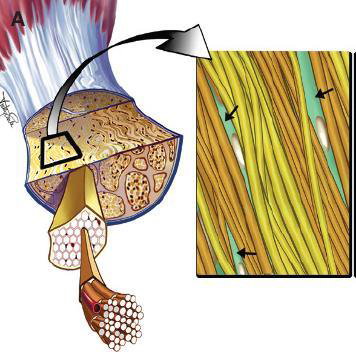
The purpose of this course is to answer a frequently asked question. How precisely does exercise promote tissue healing?
This is a fundamental question for clinicians who prescribe exercise for tendinopathies, muscle tears, non-inflammatory arthropathies and even controlled loading after fractures. What happens at the tissue level to promote repair and remodelling of tendon, muscle, articular cartilage and bone?
The one-word answer is mechanotransduction, but rather than finishing there and limiting this course to 95 words, the authors provide a short illustrated introduction to this remarkable, non-neural, physiological process.
load more

3 CEUs
We suggest that a key pathway through which chronic stress and depression influence health outcomes involves proinflammatory cytokines. We discuss the evidence for relationships between psychosocial factors and proinflammatory cytokines, and important health implications of these findings.
load more

3 Ethics CEUs
-
describe how health care professionals should behave toward one another
-
justify reporting colleagues unethical behaviour
-
identify the main ethical principles relating to cooperation with others in the care of patients
-
resolve conflicts with other health care providers
After working through this on-line course you should be able to:
load more

3 CEUs
Amyotrophic Lateral Sclerosis (ALS) is a progressive neuromuscular disease for which there is no cure. There is a general misunderstanding among healthcare professionals of the proper use and potential benefits of physical and occupational therapy to treat the symptoms and resulting loss of independence.
These services can help maximize mobility and comfort through equipment prescription, activity adaptation, patient and family education, and the use of appropriate exercise and range of motion techniques.
The literature is controversial on the prescription of exercise in this population. Individual muscle strength, fatigue and spasticity must all be taken into account when discussing exercise with persons with ALS.
It can be concluded that physical and occupational therapy intervention is beneficial to persons with ALS. However, more research is needed to decisively determine the effects of exercise on the person with ALS.
load more