

3 CEUs
What is manual therapy? How is it combined with active movement? What is the effect of this?
Find out how to apply this technique and learn about how to use it as an assessment tool for peripheral joints.
load more
3 CEUs
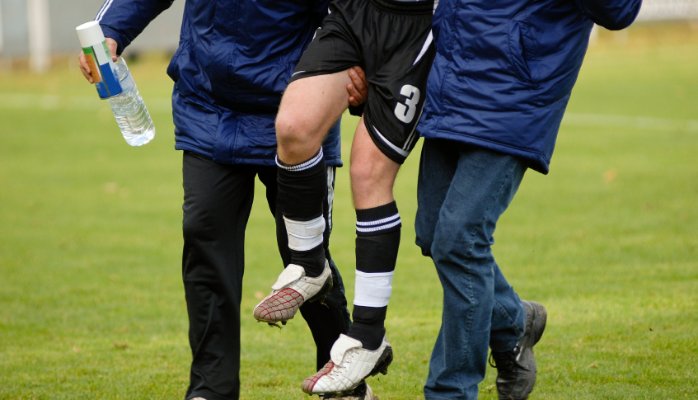
The science of sports injury prevention has grown exponentially over the past two decades. We know that interventions can prevent major knee, ankle and other injuries. This course will help you to help your sports clients to reduce the risk of injury. You will gain a thorough understanding of how sports injuries occur.
Then you will gain in-depth knowledge of the factors that can reduce the risk of injury, warm-up, stretching, taping and bracing, equipment, surfaces, training, envelope of function and the central governor model for the limit of performance and their appropriate use.
load more
3 CEUs
-
Paravertebral muscles
-
Erector spinae muscle
-
Thoraco lumbar facia and muscles
-
Erector spinae muscles of the neck
-
Deep neck flexors
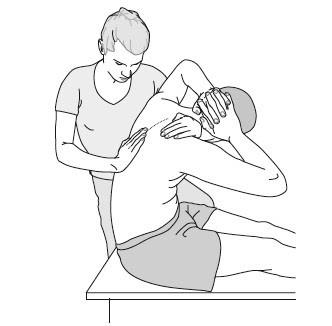
This illustrated on-line course covers the assessment, interpretation and treatment of the following spinal muscles:
load more

3 CEUs
The science of sports injury prevention has grown exponentially over the past two decades. We know that interventions can prevent major knee, ankle and other injuries. This course will help you to help your sports clients to reduce the risk of injury. You will gain a thorough understanding of how sports injuries occur.
Then you will gain in-depth knowledge of the factors that can reduce the risk of injury, warm-up, stretching, taping and bracing, equipment, surfaces, training, envelope of function and the central governor model for the limit of performance and their appropriate use.
load more

3 CEUs
-
Pectoralis major
-
Latissimus dorsi
-
Upper trapezius
-
Scalenes
-
Sternocleidomastoid
This illustrated on-line course covers the assessment, interpretation and treatment of the following tight upper quarter muscles:
Part 1:
load more

3 CEUs
As anterior cruciate ligament (ACL) reconstruction has evolved to less invasive, more anatomical approaches, rehabilitation of the injured athlete has become more progressive and innovative.
This correspondence course will help you become familiar with these innovations, looking at everything from planning rehabilitation timetables to re-establishing the athlete's confidence and self-efficacy; and preparing patients for return to play which is, after all, what we all want to achieve.
load more

3 CEUs
-
Levator scapulae
-
Infraspinatus
-
Subscapularis
-
Supraspinatus
-
Flexors of the arm
-
Flexors of the forearm
-
Biceps brachii
This illustrated on-line course covers the assessment, interpretation and treatment of the following tight upper quarter muscles:
Part 2:
load more
3 CEUs
As anterior cruciate ligament (ACL) reconstruction has evolved to less invasive, more anatomical approaches, rehabilitation of the injured athlete has become more progressive and innovative.
This correspondence course will help you become familiar with these innovations, looking at everything from planning rehabilitation timetables to re-establishing the athlete's confidence and self-efficacy; and preparing patients for return to play which is, after all, what we all want to achieve.
load more

3 CEUs
This e-Learning course summarises the tendinopathy continuum and articulates the authors' clinical reasoning and hands-on experience managing Achilles tendinopathy.
We outline graded loading concepts while emphasising that relying on recipes is likely to fail. We also provide a perspective on the role of central pain processing and peripheral input from nociceptive fibres in the context of tendinopathy.
Rehabilitation should be tailored to address identified impairments (muscle bulk asymmetries, kinetic chain dysfunction, tolerance of energy storage and release in the Achilles tendon), and progressively work toward movements and activities relevant for the individual's sport or daily activities.
load more

3 CEUs
For many years the prescription of NSAIDs for all kinds of sport injuries (soft tissue injuries, tendon injuries and bone fractures) has been a staple of sports medicine. NSAIDs have well established analgesic effects, but also have proven side effects.
Despite the risks, the medical community has considered the safety/efficiency ratio satisfactory enough to accept the administration of NSAIDs.
But does this conventional wisdom still hold true?
This course looks at recent research around NSAIDs some of which has produced surprising results. This information is important to every medical professional who frequently prescribes or recommends NSAIDs to deal with sports injuries.
load more