3 CEUs
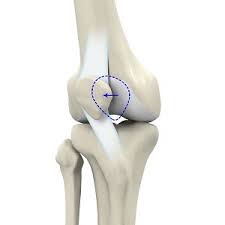
Patellar instability is a common and disabling clinical condition. Treatment of acute primary patellar dislocation aims to reduce the risk of recurrence or painful subluxation and improve function.
load more

3 CEUs
Proper use of knee examination techniques requires understanding of the anatomy and biomechanical principles of the knee as well as the pathophysiology of the injuries, including tears to the menisci and extensor mechanism, patellofemoral conditions, and osteochondritis dissecans.
Nevertheless, the clinical validity and accuracy of the diagnostic tests vary. Advanced imaging studies may be useful adjuncts.
load more
3 CEUs
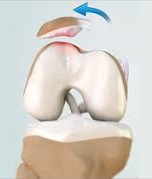
This articles purpose is to discuss the treatment options and rehabilitation protocols after non-operative and operative treatment of patellar instability, and to discuss expected return to play outcomes and functional performance with non-operative and operative treatment of patellar instability.
A criterion-based program assessing range of motion, joint effusion, strength, neuromuscular control, proprioception, agility, and power are critical measures to assess when rehabilitating this population.
load more
3 CEUs
To comment on and explore (1) the prevalence of clinical knee and hip osteoarthritis (OA); (2) the association between pain or function and clinical knee or hip OA; (3) the association between injury or surgery and clinical knee or hip OA.
There is a low prevalence of a clinical knee or hip OA in the active professional male footballer. Pain may be a valid symptom to predict or monitor knee or hip OA. Validated assessment tools should be utilised to identify a negative effect on function. The odds of developing clinical OA in the knee with the number of injuries or surgeries. The hip presents with earlier clinical signs of OA compared to the knee.
load more

3 CEUs
-
Is it possible to quantify tendon loads in rehabilitation?
-
What is the best approach to managing patellar tendinopathy in-season?
-
Can patellar tendinopathy be better managed in the elite athlete?
This article written by Prof Jill Cook will cover the following:
load more
3 CEUs
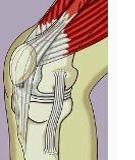
Anterior knee pain is one of the most common causes of persistent problems after implantation of a total knee replacement. It can occur in patients with or without patellar resurfacing. As a result of the surgical procedure itself many changes can occur which may affect the delicate interplay of the joint partners in the patello-femoral joint.
Functional causes of anterior knee pain can be distinguished from mechanical causes. The functional causes concern disorders of inter- and intramuscular coordination, which can be attributed to preoperative osteoarthritis.
Research about anterior knee pain has shown that not only the thigh muscles but also the hip and trunk stabilising muscles may be responsible for the development of a dynamic valgus malalignment. Dynamic valgus may be a causative factor for patellar maltracking.
The mechanical causes of patello-femoral problems after knee replacement can be distinguished according to whether they increase instability in the joint, increase joint pressure or whether they affect the muscular lever arms.
These causes include offset errors, oversizing, rotational errors of femoral or tibial component, instability, maltracking and chondrolysis, patella baja and aseptic loosening. In these cases, reoperation or revision is often necessary.
load more
3 CEUs
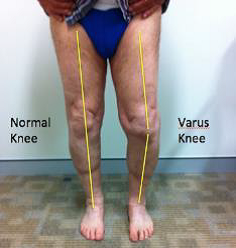
These 3 issues on-line courses provide a clear, concise manual concerning the process of physical examination of the knee.
This illustrated guide would direct the clinician in a logical, efficient and thorough search for relevant anatomy and pathology. To facilitate the teaching, the 3 issues contains over 100 illustrations.
Part 1: Observation and Bony Palpation
This on-line course illustrates the observation examination and surface anatomy of the knee and its clinical relevance to knee pathology.
load more
3 CEUs
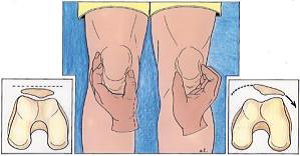
These 3 issues on-line courses provide a clear, concise manual concerning the process of physical examination of the knee.
This illustrated guide would direct the clinician in a logical, efficient and thorough search for relevant anatomy and pathology. To facilitate the teaching, the 3 issues contains over 100 illustrations.
Part 2: Soft Tissue Palpation.
This on-line course will take you step by step over soft tissue palpation of the knee region related to clinical situations.
load more
3 CEUs
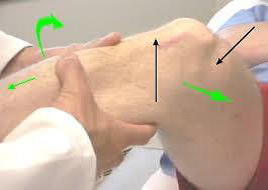
These 3 issues on-line courses provide a clear, concise manual concerning the process of physical examination of the knee.
This illustrated guide would direct the clinician in a logical, efficient and thorough search for relevant anatomy and pathology. To facilitate the teaching, the 3 issues contains over 100 illustrations.
Part 3: Tests for Joint Stability and Effusion.
This course is an illustrated guide for testing knee joint instability i.e. ACL, PSL, MCL, LCL. In addition, useful tests for knee effusion will be discussed.
load more