3 CEUs
Low back pain (LBP) is the leading cause of disability worldwide, and is often associated with costly, ineffective and sometimes harmful care.
In this short online course, we identify 10 common unhelpful beliefs about LBP and outline how they may influence behavioural and psychological responses to pain.
We counter with 10 important facts about LBP, calling on clinicians to incorporate these into their interactions with patients. The infographic is designed for the public use.
*Fast track = fast track your learning with our short online courses
load more

3 CEUs
Low back pain can be difficult to treat. Management of chronic low back pain and leg pain requires a multifactorial approach.
This course will not only help you to identify the underlying causative factors of LBP, but will also provide you with techniques that will enable you to assist patients to increase their active control of the passively unstable and associated areas in a way that will minimise symptom reoccurrences.
And add an important modality to your tool box.
load more

3 CEUs
As therapists, we often recommend exercise to reduce patients low-back pain, as well as increase their active range of motion and muscle strength. However, physical therapists face a challenge when recommending exercise to reduce low-back pain because the pain itself often inhibits the patient's ability to exercise or perform activities of daily living.
This situation becomes even more challenging if the prescribed exercise program aggravates the individual's low-back pain.
This article discusses a method which provides for the effective treatment of low back pain by allowing patients to exercise pain free earlier in the rehabilitation process.
The method comprises a unique approach utilizing the following four components simultaneously from the onset of treatment: isometric muscle contraction (IMC); assisted active oscillatory mobilization; end-of-range passive stretch; and mindfulness.
load more
3 CEUs
As therapists, we often recommend exercise to reduce patients low-back pain, as well as increase their active range of motion and muscle strength. However, Biokineticits face a challenge when recommending exercise to reduce low-back pain because the pain itself often inhibits the patient's ability to exercise or perform activities of daily living.
This situation becomes even more challenging if the prescribed exercise progam aggravates the individual's low-back pain.
This article discusses a method which provides for the effective treatment of low back pain by allowing patients to exercise pain free earlier in the rehabilitation process.
The method comprises a unique approach utilizing the following four components simultaneously from the onset of treatment: isometric muscle contraction (IMC); assisted active oscillatory movement; end-of-range passive stretch; and mindfulness.
load more

3 CEUs
Many clinical practice guidelines recommend similar approaches for the assessment and management of low back pain.
Recommendations include use of a biopsychosocial framework to guide management with initial nonpharmacological treatment, including education that supports self-management and resumption of normal activities and exercise, and psychological programmes for those with persistent symptoms.
However, globally, gaps between evidence and practice exist, with limited use of recommended first-line treatments and inappropriately high use of imaging, rest, opioids, spinal injections, and surgery.
The advances with the greatest potential are arguably those that align practice with the evidence, reduce the focus on spinal abnormalities, and ensure promotion of activity and function, including work participation.
We have identified effective, promising, or emerging solutions that could offer new directions.
load more
3 CEUs
Many clinical practice guidelines recommend similar approaches for the assessment and management of low back pain.
Recommendations include use of a biopsychosocial framework to guide management with initial nonpharmacological treatment, including education that supports self-management and resumption of normal activities and exercise, and psychological programmes for those with persistent symptoms.
However, globally, gaps between evidence and practice exist, with limited use of recommended first-line treatments and inappropriately high use of imaging, rest, opioids, spinal injections, and surgery.
The advances with the greatest potential are arguably those that align practice with the evidence, reduce the focus on spinal abnormalities, and ensure promotion of activity and function, including work participation.
We have identified effective, promising, or emerging solutions that could offer new directions.
load more

3 CEUs
We all know that physical factors impact joint motion. But what factors influence the actual mechanics of the joint? Are they purely mechanical, or could something else be at play?
This course briefly outlines the assessment findings and the principles for management of the various factors that impact function of the SIJ.
It also provides a comprehensive methodology for the effective management of pelvic pain and dysfunction.
load more
3 CEUs
We all know that physical factors impact joint motion. But what factors influence the actual mechanics of the joint? Are they purely mechanical, or could something else be at play?
This course briefly outlines the assessment findings and the principles for management of the various factors that impact function of the SIJ.
It also provides a comprehensive methodology for the effective management of pelvic pain and dysfunction.
load more
3 CEUs
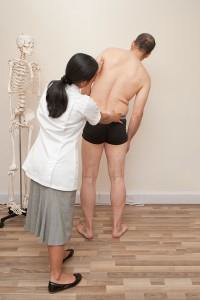
Because low back pain can involve a multitude of factors, how you examine your LBP patients is critical.
In part 1 of this course, we look at the factors that warrant consideration for their possible presence and role in a patient's low back disorder. We also pay attention to non-musculoskeletal pathology, mechanical factors, ageing and degeneration, structural anomalies and muscle dysfunction.
Part 2 covers the objective examination of the lumbar spine and includes observation, interpretation and analysis of active movements, neurological testing, tension tests, manual segmental examination, muscular examination and the interpretation of the conclusion of the examination.
load more
3 CEUs
Because low back pain can involve a multitude of factors, how you examine your LBP patients is critical.
In part 1 of this course, we look at the factors that warrant consideration for their possible presence and role in a patient's low back disorder. We also pay attention to non-musculoskeletal pathology, mechanical factors, ageing and degeneration, structural anomalies and muscle dysfunction.
Part 2 covers the objective examination of the lumbar spine and includes observation, interpretation and analysis of active movements, neurological testing, tension tests, manual segmental examination, muscular examination and the interpretation of the conclusion of the examination.
load more