
- Video

- ACL and the different ways the ACL can be injured.
- The importance of pre-rehabilitation before an ACL operation
- Later phase of the ACL rehabilitation (Criteria based)
- Return to Sport assessment for ACL
- Assessment of the knee after ACL operation?
- RTS assessment and what I look for before clearance to sport
1 Video
3 Ceu's Package, Gareth Devine - MSc (Wits) Med Biokinetics; BAHons (Wits) Phys Ed; Sport Science and Biokinetics (UJ); PGCE (Wits)
The video will cover the following:
Theory
Practical
- Video

1 Video
3 Ceu's Package, Gareth Devine - MSc (Wits) Med Biokinetics; BAHons (Wits) Phys Ed; Sport Science and Biokinetics (UJ); PGCE (Wits)
Tendinopathy is a clinical diagnosis of pain and dysfunction in a tendon. It most commonly affects athletes from adolescence through to the fourth decade of life. This condition affects health and quality of life by limiting sports and activity participation for recreational athletes and can be career-ending for professional athletes. Once symptoms are aggravated, activities of daily living are affected.
Tendinopathy clinically presents as localised pain at the proximal or distal tendon attachment to bone with high-level tendon loading, such as jumping and changing direction. It is commonly clinically diagnosed in conjunction with imaging (ultrasound or magnetic resonance where structural disruptions on the scans represent areas of tendon pathology. Importantly, there is a disconnection between pathology on imaging and pain; it is common to have abnormal tendons on imaging in people with pain-free function.
Treatment of tendinopathy may involve prolonged rehabilitation and can ultimately be ineffective. Management is limited by a poor understanding of how this condition develops, limited knowledge of risk factors and a paucity of time-efficient, effective treatments. This webinar discusses the prevalence of tendinopathy, associated and risk factors, assessment techniques and treatment approaches that are based on evidence where possible, supplemented by expert opinion. This webinar utilizes videos of practical rehabilitation.
- Video

-
Assessment of hamstring
-
Initial rehabilitation of hamstring
-
Continued assessment of hamstring
-
Isontonic strengthening of hamstring into multi joint strengthening
-
Different stages of hamstring rehabilitation
-
Are they ready to return to sport?
1 Video
3 Ceu's Package, Gareth Devine - MSc (Wits) Med Biokinetics; BAHons (Wits) Phys Ed; Sport Science and Biokinetics (UJ); PGCE (Wits)
The hamstring video will look at:
- Video
-
Assessment of the shoulder
-
Rehabilitation of the shoulder
1 Video
3 Ceu's Package, Gareth Devine - MSc (Wits) Med Biokinetics; BAHons (Wits) Phys Ed; Sport Science and Biokinetics (UJ); PGCE (Wits)
- Stage 1
- Stage 2
- Stage 3
- Stage 4
- Psychosocial aspect
- Return to sport
- Video

1 Video
3 Ceu's Package, Arie Michaeli - MSc PT, MCMT
As therapists, we often recommend exercise to reduce patients low-back pain, as well as increase their active range of motion and muscle strength. However, physical therapists face a challenge when recommending exercise to reduce low-back pain because the pain itself often inhibits the patient's ability to exercise or perform activities of daily living. This situation becomes even more challenging if the prescribed exercise program aggravates the individual's low-back pain.
This video discusses a method which provides for the effective treatment of low back pain by allowing patients to exercise pain free earlier in the rehabilitation process. The method comprises a unique approach utilizing the following four components simultaneously from the onset of treatment: isometric muscle contraction (IMC); assisted active oscillatory mobilization; end-of-range passive stretch; and mindfulness.
- Video
1 Video
3 Ceu's Package, Gareth Devine - MSc (Wits) Med Biokinetics; BAHons (Wits) Phys Ed; Sport Science and Biokinetics (UJ); PGCE (Wits)
The focus of the video will be to look at the correct techniques to assess the movement of the full body and determine any biomechanical issues that would be causing the anterior knee pain. It will also try help to get the participants to understand the many different factors that can lead to anterior knee pain.
The presentation will go through a full assessment of a patient to identify the issues the patient may have. Then will discuss the different stages of rehabilitation looking at criteria-based assessment to help the patient move into the correct stages at the correct time for their rehabilitation.
There will also be discussion on how it is important to allow the patient to be educated through the process so that they can learn the ways to help themselves during the rehabilitation process.
There will also be a look at return to sport protocols and how they play a role in getting the patient back to their sport as ready and prepared as possible.
- Video

1 Video
3 Ceu's Package, Gareth Devine - MSc (Wits) Med Biokinetics; BAHons (Wits) Phys Ed; Sport Science and Biokinetics (UJ); PGCE (Wits)
The video will take a look at the uniqueness of the hip and how there are many factors that can cause the hip to move and be positioned to cause problems and pain. The hip joint will be looked at and how the different structures (Bone and muscles) will affect the position of the hip and the way it will function.
The hip assessment is a very unique assessment that will look at the different range of motions, strength and function movements that affect the hip. After these have been assessed it will look at the different rehabilitation stages and how they must be moved through criteria-based assessment so that the hip will not be flared or reinjured.
Once the correct process is followed the presentation will look at practical ways that the therapist can allow the patient to exercise and move slowly back to their correct activities.
There will also be a major focus on what to avoid as to avoid reinjury or flaring of the hip.
There will be a return to sport assessment as well as return to sport drills that will allow the patient to return safely back to their sport.
- Video
1 Video
3 Ceu's Package, Gareth Devine - MSc (Wits) Med Biokinetics; BAHons (Wits) Phys Ed; Sport Science and Biokinetics (UJ); PGCE (Wits)
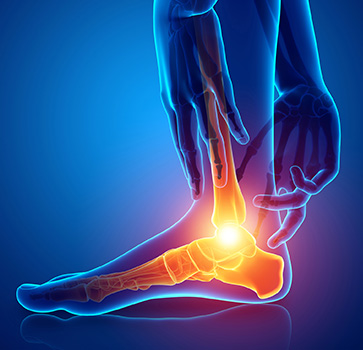
The ankle is a joint that can cause many problems when it is injured due to the amount of load that goes through the ankle all the time. The presentation will look at how it is important to assess the ankle and its range of motions so that the therapist is aware of how and what the ankle joint can do.
The initial stages of rehabilitation will focus on small intrinsic muscles that need to be worked on so that they are working in the later stages of rehabilitation. These intrinsic exercises are difficult and often take lots of concentration to get right.
Once the patient has got the fundamental movements working they will work on correct rehabilitation through different stages and allow them to progress through criteria-based assessments so they move at the correct level for their abilities.
There will be focus on a staged rehabilitation process finalized with a return to sport assessment and slow integration into their sport.
- Video

1 Video
3 Ceu's Package, Clare-Anne Kilroe - BSc PT
An integrated look at the various taping methods used for common sporting injuries. These techniques will help you manage both the acute and chronic ankle, knee and shoulder conditions for protection as well as a wonderful tool to use to advance the rehabilitation of your athletes.
Joint and muscle techniques will be practically addressed and the current research presented and debated for a clearer understanding of how and when conditions will benefit most from taping as part of an integrated treatment plan.
- Video

2 Videos, 1 online article
9 Ceu's Package, Dr Ian Weinberg M.B., B.Ch., F.C.S.(S.A.) and Arie Michaeli MSc PT, MCMT