
- Video

-
Video: Tips for Success - 3 Ceu's to the value of R550
-
Article: Ethical leadership as a requirement to develop and enhance your private practice - 3 Ceu's in Ethics to the value of R550
- Video 1 - Ethics.
- Video 2 - Strategic Management.
- Video 3 - Marketing.
- Video 4 - Human Resources Management.
- Video 5 - Financial Management
- Video 6 - Business Tips.
6 Videos
21 Ceu's Package including 8 in Ethics, Wilma Erasmus - MSc PT (Wits) Nat Dip PT (Pta)
Receive free bonus gifts:
As a private health sector entrepreneur, your success depends on both your passion and vision – as well as your strong business skills.
Video titles:
- Video

13 Videos
39 Ceu's Package, Dr Toby Hall - PhD, MSc, Post Grad Dip Manip Ther. FACP and
Kim Robinson - B App Sci (Physio) Grad Dip Manip Ther (Distinctions), FACP
This online course presents a comprehensive approach to the evaluation of lumbar spine pain disorders. Of special interest will be clinical practice, emphasizing clinical examination, evaluation through clinical reasoning, differential diagnosis, & management. Evidence-based or evidence-informed practice is essential but can only be used when it exists at a satisfactory level of quality.
Unfortunately there are still aspects of MT that have not been adequately investigated. This course explores the available evidence regarding the use of MT and presents a classification system for the lumbar spine to enable individualized management combining MT & exercise, among other management strategies, for a wide range of pain disorders.
- Video
5 Videos, 5 online articles + 1 Ethics course
33 Ceu's Package, Dr Adriaan Louw - PT, PhD and Thomas R. Denninger - PT, DPT, OCS, FAAOMPT
- Video

1 Video, 1 online article
6 Ceu's Package, Dr Adriaan Louw - PT, PhD
GMI is a sequential series of techniques to remap the structural changes in the brain including laterality, motor imagery, sensory discrimination, and mirror therapy.
- Video

1 Video, 1 online article
6 Ceu's Package, Dr Adriaan Louw - PT, PhD
To date, three systematic reviews have shown no benefit from current preoperative education programs in regard to postoperative pain, range of motion, length of hospital stay and function. Emerging research has shown that these educational models fail partly due to a heavy focus on procedural and anatomical education, with little to no attention being given to pain.
A newly designed program has shown that teaching patients more about pain prior to surgery leads to a range of positive outcomes including a significant decrease in healthcare utilisation after surgery, increased patient satisfaction and more.
This course aims to introduce learners to the development of the preoperative neuroscience education session as well as the content, delivery methods and clinical application of such a program.
- Video
1 Video, 1 online article
6 Ceu's Package, Dr Adriaan Louw - PT, PhD
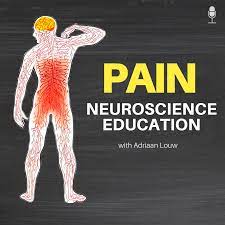
This course is designed to introduce the concept of Therapeutic Neuroscience Education and update learners on the latest evidence and clinical application of therapeutic neuroscience education for patients in pain.
On completion of this course, you will be able to: discuss the latest evidence for therapeutic neuroscience education and demonstrate the clinical ability to apply therapeutic neuroscience education elements to clinical practice.
- Video

1 Video, 1 online article
6 Ceu's Package, Thomas R. Denninger - PT, DPT, OCS, FAAOMPT
Recent clinical research suggests that manual therapy is effective, especially when certain patients with musculoskeletal pain are targeted. Despite the favourable clinical outcomes from manual therapy, we still know very little about the mechanisms of its effectiveness.
In this course, we consider wide ranging mechanisms of manual therapy with special attention directed towards recent research investigating manual therapy influence on pain.
This course will begin by defining manual therapy and considering reasons for investigating its mechanisms. We then provide a conceptual framework for the course including a discussion of models in the peer-review literature that explain how manual therapy works.
- Video

1 Video, 1 online article
6 Ceu's Package, Dr Adriaan Louw - PT, PhD
This course challenges traditional methods for determining patients most likely to benefit from manual therapy. Learners investigate the complex interplay between neurophysiologic effect, placebo, patient expectation and therapeutic alliance when manual therapy is applied.
Learners discover a more holistic approach to clinical reasoning, with a patient-centric frame of thinking. In addition, contemporary research and evidence surrounding pain neuroscience education is explored with an emphasis on integrative treatment models.
- Video
4 Videos, 3 online articles + 1 Ethics course
24 Ceu's Package, Dr Eyal Lederman - PhD in Physiotherapy (PT), Prof. Tim Watson - PhD BSc MCSP DipTp and Dr. Adam Cunliffe -Masters degree and PhD in Human Nutrition
- Video
-
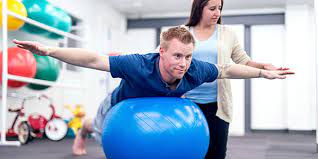
All human physical activity is exercise
-
Be inducted to the life gym using daily activities for rehabilitation
-
Discover functioncise: exercise prescription without exercise
-
Learn to construct a personalised and condition specific exercise management
1 Video
3 Ceu's Package, Dr Eyal Lederman - PhD in Physiotherapy (PT)
In this online video workshop Dr Lederman will explore exercise prescription from an osteopathic Process Approach perspective. This approach aims to identify the dominant recovery processes associated with the patient's complaint and provide a management that is patient and condition specific. This unique osteopathic approach uses the individual's own movement repertoire found in daily tasks and activities to provide the necessary movement challenges to support recovery.
The workshop will look at the timescales for commencement of exercise after injury, surgery and chronic musculoskeletal conditions. It will also explore how to challenge movement losses in the presence of pain; in particular, identifying when physical loading is safe and beneficial. The workshop will also discuss exercise prescription in relation to enhancing physical and sports performance.
The workshop is modeled on a functional approach in which the movement challenges are derived from the individual's own movement repertoire. A functional approach is different to traditional remedial exercise practices that are mostly derived from the fitness/strength and conditioning industry. These traditional approaches are often unsuitable and ineffective for individuals recovering from various musculoskeletal and pain conditions.
Condition specific management will be explored through a Process Approach. There are three primary processes underlying recovery from all musculoskeletal and pain conditions: repair, adaptation and modulation of symptoms. In the workshop the participants will learn how to supports these processes with remedial activities/exercise.
In this workshop the participants will learn a current, science informed, approach that can provide a therapeutic continuum between the clinical session and the patient's environment. This approach will allow you to develop more effective remedial and self-care exercise management that can be applied to a wide range of musculoskeletal and pain condition.
In the workshop you will explore how your own remedial approaches can be integrated into the management. Overall, the workshop will provide you with knowledge to develop suitable movement/exercise and self-care plans to further assist the pace and success of your patients' recovery.